How to Build a Social Media Content Calendar for Small Businesses (2026)

Rohit Nandan
Founder & Lead Digital Marketing Consultant
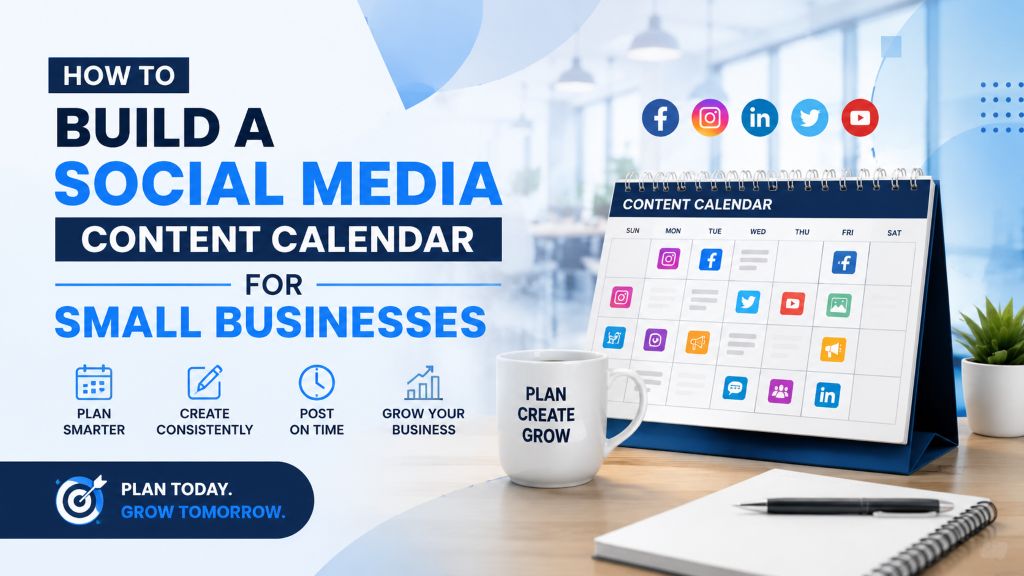
Quick answer: A social media content calendar is a planning document that organizes what to post, when, and on which platform — typically built around content pillars (recurring themes), a realistic posting frequency, and a mix of content types. Building one takes about an hour using a simple spreadsheet and prevents the scramble of figuring out what to post each day. For Indian businesses, layering your calendar against the country’s festival calendar — Holi, Independence Day, Raksha Bandhan, Diwali — usually captures the highest-engagement windows of the year.
Posting “whenever there’s time” is the most common reason small business social media accounts stay inconsistent — and inconsistency is one of the biggest drags on organic reach across nearly every platform. A content calendar fixes this by turning social media from a daily scramble into a planned, repeatable process.
What Is a Social Media Content Calendar? {#what-is-it}
A social media content calendar is a structured plan — usually a spreadsheet or simple tool — that maps out what content you’ll post, on which platform, and when. It removes the need to think of something to post every single day, replacing daily improvisation with weekly or monthly planning.
Step 1: Define Your Content Pillars {#steps}
Content pillars are 3-5 recurring themes that all your content falls under. This keeps your social presence focused rather than scattered across unrelated topics.
For a typical small business, content pillars might include:
- Educational — tips, how-tos, industry insights relevant to your audience
- Behind-the-scenes — your team, your process, your workspace
- Social proof — testimonials, reviews, case studies, results
- Promotional — offers, new products/services, announcements
- Community/engagement — questions, polls, user-generated content
Step 2: Choose a Realistic Posting Frequency
It’s better to post consistently 3 times a week than sporadically 7 times one week and zero the next. Choose a frequency you can sustain long-term, even during busy periods, rather than an ambitious schedule you’ll inevitably abandon.
A common, sustainable starting point for small businesses:
- Instagram/Facebook: 3-4 feed posts + daily Stories
- LinkedIn: 2-3 posts per week
- X (Twitter): 3-5 posts per week, given the platform’s faster content cycle
Frequency is only half the equation — when you post within that frequency also matters. Our guide on Best Times to Post on Instagram & LinkedIn (Including IST) covers this in depth, including India-specific timing, and pairs directly with the calendar you’re building here.
Step 3: Build Your Calendar Structure
A simple spreadsheet works fine — you don’t need expensive software to start. Include these columns:
- Date
- Platform
- Content Pillar
- Caption/Copy
- Visual/Asset needed
- Status (Idea → Drafted → Scheduled → Posted)
- Performance notes (filled in after posting)
Step 4: Batch-Plan a Month at a Time
Rather than deciding daily, block out time once a month (or once every two weeks) to plan and draft a full batch of content. This dramatically reduces the daily mental load and lets you plan around key dates — holidays, product launches, industry events — in advance.
A tip worth trying: many small businesses now use AI writing tools to draft a first pass of captions for a full month’s batch in one sitting, then edit for their brand voice — this can cut the most time-consuming part of batch planning significantly, as long as you’re still reviewing and personalizing rather than posting the raw output.
Step 5: Mix Content Formats Intentionally
Don’t post the same format every time. A balanced mix typically includes:
- Reels/short-form video — for reach and discovery
- Carousels/static posts — for saves and shares, particularly educational content
- Stories — for daily presence and relationship-building with your existing audience
- Occasional live or long-form content — for deeper engagement when relevant
If you’re planning your Instagram mix specifically, it’s worth understanding why this variety matters — our Instagram Algorithm 2026 guide breaks down how the algorithm treats different formats differently, which should directly inform how you weight your calendar.
Step 6: Leave Room for Real-Time and Reactive Content
A calendar shouldn’t be so rigid that it prevents posting something timely — a trending topic relevant to your industry, a quick customer shoutout, a same-day announcement. Plan roughly 80% of your content in advance, and leave 20% flexible for real-time opportunities.
Step 7: Review Performance Monthly and Adjust
At the end of each month, look at which posts performed best (by reach, saves, or engagement, depending on your goal) and which content pillars are resonating most. Use this to adjust the next month’s calendar rather than repeating a static plan indefinitely.
Plan Around India’s Festival and Key Dates Calendar {#festivals}
For most Indian small businesses, festival season isn’t just a nice content theme — it’s often the single highest-engagement, highest-commercial-intent window of the year. Building your calendar around it in advance (rather than scrambling the week of) is one of the highest-leverage things you can do with the planning process above.
A few fixed-date national holidays worth anchoring your calendar to every year:
- Republic Day — January 26
- Independence Day — August 15
- Gandhi Jayanti — October 2
- Christmas — December 25
Alongside these, India’s major lunar-calendar festivals shift dates each year, but fall in roughly the same seasonal windows and are worth planning content around regardless of the exact date:
- Holi — typically late February to March
- Raksha Bandhan — typically August
- Ganesh Chaturthi — typically August/September
- Navratri and Dussehra — typically September/October
- Diwali — typically October/November
Since exact dates shift year to year (and can vary further by region), check a current-year festival calendar when you sit down to batch-plan rather than relying on last year’s dates. Build in enough lead time — a week or two before each major festival — since audience attention and buying intent often start rising before the actual date, not just on it.
A Simple Starter Template {#template}
| DATE | PLATFORM | CONTENT PILLAR | CAPTION DRAFT | VISUAL NEEDED | STATUS |
|---|---|---|---|---|---|
| [date] | Educational | [draft caption] | [photo/video/graphic] | Idea | |
| [date] | Social Proof | [draft caption] | [testimonial graphic] | Drafted | |
| [date] | Promotional | [draft caption] | [product photo] | Scheduled |
Duplicate this structure for each week or month, adjusting platforms and pillars to match your specific mix — and add a festival/key-date row wherever your seasonal planning above calls for one.
Final Thoughts
A content calendar doesn’t make your social media strategy more complicated — it makes it dramatically simpler by replacing daily decision fatigue with a clear, repeatable plan. Most small businesses that build one consistently report posting more reliably and seeing steadier engagement within the first month of using it — and for Indian businesses specifically, layering it against the festival calendar usually captures the year’s biggest windows of audience attention.
Want a content strategy and calendar built for your specific business?
ZestRank offers full social media marketing services in Delhi — from content pillar strategy to execution across Instagram, Facebook, and LinkedIn. Get a free social media audit and we’ll show you what a properly planned content calendar for your brand could look like.
Frequently Asked Questions {#faqs}
What tools can I use to manage a social media content calendar?
A simple spreadsheet (Google Sheets or Excel) works perfectly well for most small businesses starting out. As needs grow, dedicated tools like Later, Buffer, or Meta Business Suite add scheduling and approval workflows on top of the same underlying planning structure.
How far in advance should I plan my social media content?
Most small businesses benefit from planning 2-4 weeks at a time, batch-creating content in that window while leaving some flexibility for timely or reactive posts.
How many content pillars should a small business have?
3-5 content pillars is typically enough to keep content varied without becoming scattered or unfocused. Fewer than 3 can feel repetitive; more than 5 often becomes difficult to plan and maintain consistently.
Does a content calendar help with social media algorithm performance?
Indirectly, yes — by enabling more consistent posting frequency, which most platforms’ algorithms favor over sporadic activity, and by ensuring a deliberate mix of content formats rather than relying on whatever’s easiest to post that day.
Should Indian small businesses build separate content around festivals?
Yes, for most consumer-facing businesses. Festival periods like Diwali, Holi, and Raksha Bandhan typically see significantly higher engagement and buying intent than an average week, making them worth planning for specifically rather than treating as just another entry in a generic content pillar.
About the Author: Rohit Nandan
Founder & Lead Digital Marketing ConsultantRohit Nandan is ZestRank's Founder & Lead Digital Marketing Consultant and YouTube SEO Expert, with over 15 years of experience diagnosing and running search campaigns for businesses across Delhi NCR. He personally reviews ZestRank's client projects, with deep expertise in technical SEO infrastructure and YouTube optimization. Have a question about this post? Message Rohit directly on WhatsApp.
Free Consultation
Ready to see how these exact parameters can be configured to expand your physical business discovery indices?
Request Strategy Call WhatsApp Strategist