You’re Doing SEO Wrong in 2026 — Here’s What Actually Works Now
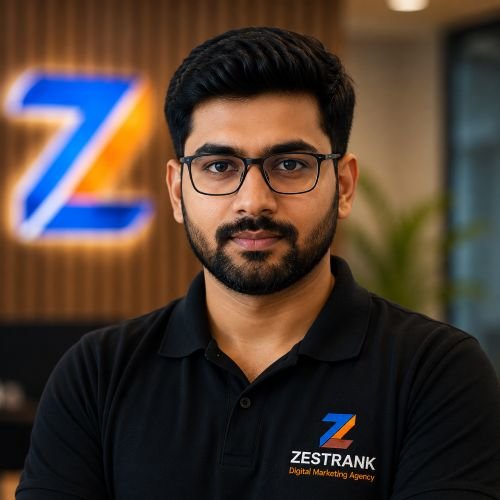
Rohit Nandan
Founder & Lead Digital Marketing Consultant
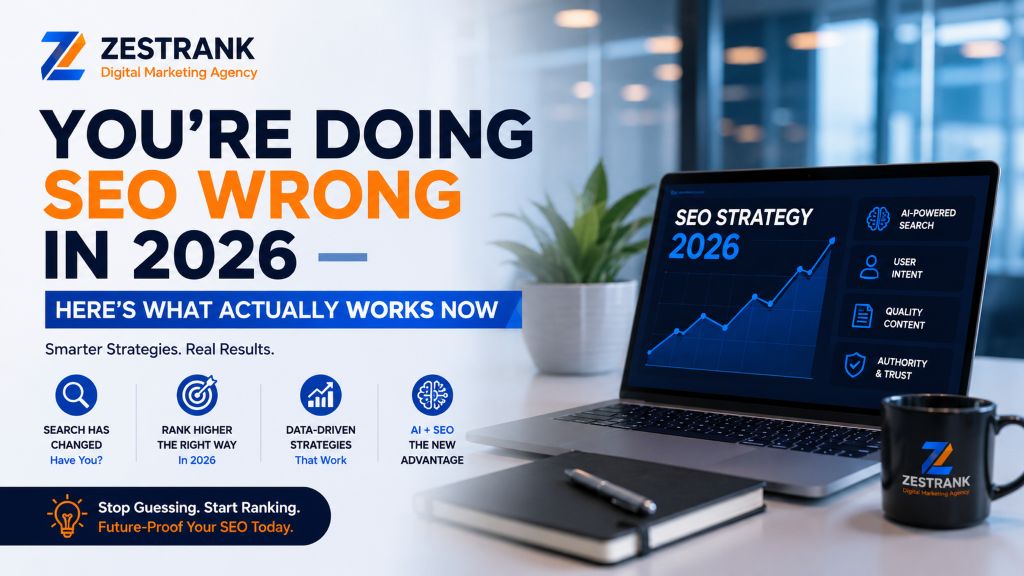
Quick answer: In 2026, your Google ranking and your AI search visibility are two completely separate scores. Ranking #1 on Google gives you only a 31.4% chance of appearing in an AI-generated answer — and that drops to 2.6% by position four. Meanwhile, 90% of pages AI actually cites rank position 21 or lower on Google. If you’re still building content purely around keywords and rankings, you’re optimizing for the wrong game entirely.
Here’s the uncomfortable truth most digital marketing advice won’t say out loud: the SEO playbook that worked for the last decade isn’t just becoming less effective — in many cases it’s actively making you invisible in the channels where your future customers are finding answers right now.
This isn’t a prediction about where search is going. It’s already here. And the businesses that understand what’s actually changed — not just that AI is “disrupting” things, but specifically how and why — are the ones quietly building compounding visibility while everyone else is refreshing their rank tracker.
Let’s break it down, chapter by chapter.
Chapter 1: The Keyword Era Was Never What We Thought It Was
Ask any marketer about the early days of SEO and they’ll tell you the same thing: “It used to be so much easier.” But that’s not quite true. It wasn’t easier. We just got lucky.
What we called “SEO strategy” back then was mostly keyword matching. We found what people typed, we put those words on a page, and the algorithm rewarded us. It felt like strategic insight. It was mostly pattern recognition in a system that was easy to game.
Here’s the problem: matching keywords and understanding the person behind the search are completely different things. If someone searched “best running shoes,” you had no idea whether they were:
- A first-time runner who’s never bought technical footwear
- Someone with a knee injury needing specific support
- A parent buying shoes for their kids
The keyword was a blunt proxy for what they actually needed. And for a long time, it was enough to get away with.
But Google was already working to close that gap, long before AI entered the picture. Every featured snippet, every “People Also Ask” box, every zero-click answer was Google reaching for the intent beneath the words. Before Google AI Overviews even rolled out at scale, 57% of all searches were already ending without a single click. The traffic model most businesses built their digital presence on was already quietly eroding.
Then AI made the gap impossible to ignore.
Chapter 2: Google Actually Told Us This Was Coming — In 2015
In 2015, Google published a framework called Micro Moments. At the time, almost nobody paid serious attention to it, because keyword matching still worked well enough and there was no urgency to change.
The framework said something deceptively simple: people don’t search at random. Every search comes from one of four states of mind, what Google called “moments.”
- Moment 1: Want to Know. The searcher is researching. They want to understand something. “How do running shoes actually affect knee pain?”
- Moment 2: Want to Go. They’re looking for a place or location. “Best running store near me.”
- Moment 3: Want to Do. They’re trying to solve a problem or complete a task. “How to fix shin splints when training for a marathon.”
- Moment 4: Want to Buy. They’re ready to make a decision. “Best running shoes for flat feet under ₹5,000.”
Now look at those four moments and notice something: “running shoes” could plausibly appear in all four. The keyword is identical. But the person, their context, and what they actually need from your content are completely different. Which means your content needs to be completely different too.
Google was telling the entire industry: the keyword is the surface. The real opportunity is understanding the moment underneath. And almost everyone ignored it because the keyword shortcut still worked.
Until AI made that shortcut impossible.
Chapter 3: Why Keyword SEO Stops Working When AI Is In the Room
Nobody types keywords into ChatGPT. They describe situations.
“My seven-year-old has had headaches every afternoon for two weeks. She drinks water, she’s not stressed at school. It only happens after she uses her tablet for more than an hour. What could be causing this?” “I run a local bakery in South Delhi. I’ve been posting on Instagram for six months. Decent likes, zero new customers walking in. I have no budget for ads. What am I doing wrong?”
Those aren’t keywords. They’re complete human situations. And the data backs up that this is how people search when AI is an option: short queries of one to three words trigger an AI answer just 23% of the time, while queries of six words or more trigger an AI answer 77% of the time. The longer, more human, more situation-specific the search — the more AI steps in to handle it directly.
And when AI steps in, it doesn’t just answer. It absorbs the click entirely. Research tracking thousands of searches found that when an AI Overview appears above organic results, click-through rates for the top-ranking page fell from 1.76% down to just 0.61% — a 65% drop for the exact position every SEO campaign is fighting to reach. You can still rank #1. The traffic increasingly isn’t there.
Chapter 4: Your Google Rank and Your AI Visibility Are Two Separate Scores
This is the part that changes everything.
Research analyzing 500 commercial keywords run through multiple AI tools found:
- Ranking #1 on Google gives you a 31.4% chance of appearing in the AI-generated answer.
- By rank 4, that drops to 2.6%.
- And here’s the most important number: 90% of the pages AI actually cites rank at position 21 or lower on Google.
Read that again. Nine out of ten things AI cites sit outside Google’s top 20 organic results. The overlap between “ranking well on Google” and “being cited by AI” is genuinely, measurably small.
And this gap is widening. AI used to pull most of its citations from Google’s top 10 — around 76% of citations came from there. Today that figure is down to 38%. The majority of what AI cites now comes from entirely outside Google’s top results.
If your entire digital marketing strategy is built around climbing Google rankings, you are winning a game that is becoming increasingly disconnected from where a growing share of your customers are getting their answers. Our full technical SEO mistakes guide covers a related, often-missed piece of this: many sites are also invisible to AI crawlers entirely for technical reasons, before content quality even enters the picture.
Chapter 5: How to Actually Find the Moment Behind the Search
So if keywords are the wrong thing to optimize for, what’s the right thing? The moment.
And there’s a practical way to find it that most businesses underuse. Tools like Answer the Public, People Also Ask, and Google autocomplete don’t just show you blog topics. They show you how people feel right before they search — the emotional and situational context behind the query.
Take something like “running shoes” as an example:
- “Running shoes for bad knees” = a pain moment — the person needs trust and reassurance first, information second.
- “Best running shoes under ₹5,000” = a budget moment — they’ve already decided to buy, they’re comparing options.
- “Are running shoes even worth it?” = a doubt moment — they need to be convinced before they need to be informed.
Three queries that look almost identical on the surface. Three completely different people, in three completely different emotional states, needing three completely different types of content. Content built around the full moment gets cited. Content built around the keyword string gets skipped.
Chapter 6: Two Questions That Decide Whether AI Cites You
Getting cited by AI comes down to two questions.
Question 1: Can AI extract a clean, complete answer from your page?
AI doesn’t read your content the way a human does. It scans for one thing: can I lift a confident, complete answer to this situation directly off this page? If the answer is buried in paragraph eight after three paragraphs of preamble, AI skips your page and cites the one that leads with it.
Four fixes for this:
- Lead with the answer. Put what they came for in the first two sentences, not after a lengthy intro. This is exactly what the “Quick Answer” blocks at the top of every ZestRank blog post are designed to do — and it’s why they work both for AI citation and for featured snippets.
- Write your headings as the exact question. Not “moisturizers for skin” but “What is the best moisturiser for acne-prone skin under ₹1,000?” That heading matches, word for word, what someone types into an AI tool at midnight. The closer the match, the stronger the citation pull.
- Build real FAQ sections using actual human language. The question clusters from your keyword research aren’t just blog topics — they’re almost verbatim the prompts people feed into AI. Turn your top questions into a clean FAQ section at the bottom of your key pages and you’ll move your citation rate more than months of technical tweaks would.
- Back it up with structured data and clear author signals. Schema markup doesn’t guarantee a citation, but it does help AI systems parse what a page is actually about with less ambiguity, and a visible, credentialed author bio contributes to the trust signals both Google and AI systems weigh. Our on-page SEO checklist for small businesses covers the fundamentals this all sits on top of.
Question 2: Are you showing up in the places AI already trusts?
This is the part almost every SEO guide skips — and it’s three times bigger than the first part. Your own website accounts for roughly 25% of what AI cites about your brand. The other 75% comes from third-party sources AI has already decided to trust.
Three that dominate right now:
- Reddit — one of the most heavily cited sources across Google Gemini, ChatGPT, and Perplexity. If your industry category has active Reddit communities, your brand being mentioned there matters to AI citations in a way your website alone cannot replicate.
- Review platforms — brand profiles on platforms like G2, Trustpilot, and similar sites are cited at a significantly higher rate than brands without a presence there. This applies doubly for service businesses where reviews are a natural discovery mechanism.
- Roundup and “best of” lists — “Best [category] in [city]” style list articles are cited constantly by AI engines when recommending options. Getting your business featured in existing, well-performing roundups matters more than writing another blog post of your own.
The implication: the most important off-page digital marketing work in 2026 isn’t link building for PageRank. It’s getting your brand genuinely and positively mentioned in the places AI engines already trust.
A Quick Note on llms.txt
You’ve probably seen llms.txt recommended as a quick fix for AI visibility — a text file that lists your key pages for AI crawlers to read, similar in spirit to a sitemap. It’s worth understanding what it actually does before investing time in it: current evidence indicates the major AI search systems do not treat llms.txt as a ranking or citation signal today. It can still be useful as internal documentation of your key pages for your own team, but it isn’t a substitute for the two things that actually move citation rates — extractable, well-structured content, and genuine third-party presence in the places AI already trusts, as above.
Chapter 7: What 20 Years of SEO Evolution Actually Teaches Us
Every major Google algorithm update over the past two decades — Panda, Penguin, Hummingbird, BERT, Helpful Content, AI Overviews — followed the same underlying direction. They moved the target closer to what people actually needed and further from what marketers could fake.
Panda killed thin, low-quality content farms. Penguin killed manipulative link schemes. Hummingbird introduced semantic understanding of whole queries, not just individual keywords. BERT improved understanding of natural language and sentence context. Helpful Content penalized content written for search engines rather than people.
Every single update moved in one direction: closer to the real person on the other side of the search, further from the tricks that let marketers simulate relevance they didn’t actually have.
AI Overviews, ChatGPT, Gemini, Perplexity — these aren’t a sudden disruption. They’re the logical continuation of that 20-year direction, just at a speed and scale that makes the shift impossible to ignore or delay.
Moments can’t be faked. And that’s ultimately good news for businesses willing to do the real work.
What This Means for Your Business Right Now
Across businesses that tracked their AI search referrals consistently, leads coming from AI search grew from 3.1% to 7.4% in a single year — more than doubling. The businesses seeing that growth started early, before AI search became the consensus priority. The window is still open, but the advantage of moving now versus moving in six months is real and measurable.
Your Action Plan for This Week
- Take your five highest-traffic pages.
- Open a keyword research or “People Also Ask” tool for each page’s core topic.
- Find the top 10 “what, why, when, how” questions people ask around that topic.
- Identify three that match a “want to know” or “want to buy” moment specifically.
- Write a clean, direct FAQ section at the bottom of each page answering those three questions in the natural language someone would use when talking to an AI assistant.
That’s it. Five pages, three questions each. Done this week. The compounding starts immediately.
Final Thoughts
The person on the other side of every search — whether it ends in a Google click, an AI Overview, a ChatGPT conversation, or a Perplexity answer — has a real problem they need solved. They always did. The only thing that’s changed is how directly the technology now connects that person’s actual situation to the content that genuinely answers it.
If your content is built around real moments, real questions, and real answers — not just keyword density and rank targets — you’re not behind the curve. You’re exactly where the curve is heading. You just need to make sure your structure lets AI actually find and extract what you’ve already built.
This connects directly to everything we’ve covered on this blog — from how Google AI Overviews are changing your impressions and CTR data to what GEO (Generative Engine Optimization) actually means in practice to our full Answer Engine Optimization (AEO) playbook. The pieces fit together. The strategy is consistent. The execution is what separates the businesses that build compounding visibility from those still waiting for their rank tracker to tell them something different.
Want a team that builds this for you?
ZestRank is a digital marketing agency in Delhi that builds moment-first, AI-ready content strategies alongside solid SEO, local SEO, and performance marketing — not keyword chasing. Not sure where to start? See signs your website needs an SEO overhaul, or how long SEO actually takes to show results in India before you commit budget. Our dedicated AI Search Optimization service builds exactly this — moment-first content, extraction-ready structure, and third-party citation building — for businesses that want to show up in AI answers, not just Google’s blue links. Book a free strategy session and we’ll audit how AI-visible your current content actually is.
Frequently Asked Questions
Does ranking #1 on Google still matter in 2026?
Yes, but its meaning has changed. A #1 ranking still provides baseline visibility and credibility, but it no longer guarantees significant click traffic — particularly when AI Overviews appear above the result. The more important metric now is whether your content gets cited within AI-generated answers, which is a separate, independent score from your ranking position.
What’s the difference between SEO and GEO (Generative Engine Optimization)?
Traditional SEO optimizes content to rank in Google’s list of blue links, primarily through keywords, backlinks, and technical health signals. GEO optimizes content to be cited and used directly by AI-generated answers in tools like Google AI Overviews, ChatGPT, Gemini, and Perplexity — prioritizing clear structure, direct answers, genuine authority, and third-party brand mentions over keyword density.
How do I know if my content is being cited by AI tools?
Check manually by asking ChatGPT, Gemini, and Perplexity the exact questions your content is meant to answer, and observe whether your website is referenced. Monitor referral traffic in Google Analytics for visits originating from AI platforms. Watch for unusual upticks in branded search traffic, which often correlates with AI citation exposure even when there’s no direct click-through.
Should I stop doing traditional SEO and focus only on AI search?
No — these are complementary, not competing strategies. Strong technical SEO fundamentals (crawlability, site speed, mobile usability, and AI crawler access) remain prerequisites for both traditional rankings and AI citation. The shift is about adding AI-optimized content structure and third-party citation building on top of solid SEO foundations, not replacing one with the other.
Does llms.txt actually improve AI search visibility?
Not currently, based on available evidence — the major AI search systems don’t treat llms.txt as a ranking or citation signal today. It can serve as useful internal documentation, but genuinely extractable content and real third-party mentions are what actually move citation rates.
What are the three most important things I can do this week to improve AI search visibility?
First, add direct-answer “Quick Answer” blocks at the top of your most important pages. Second, rewrite your key page headings to match the natural, full-sentence questions people ask AI assistants. Third, build or improve your presence on review platforms and roundup lists in your category — the third-party citations that AI already trusts account for roughly 75% of what AI cites about your brand.
Have a question about this post? Message Rohit directly on WhatsApp or book a free strategy call. For more breakdowns like this, browse the ZestRank blog, or learn more about our team.
About the Author: Rohit Nandan
Founder & Lead Digital Marketing ConsultantRohit Nandan is ZestRank's Founder & Lead Digital Marketing Consultant and YouTube SEO Expert, with over 15 years of experience diagnosing and running search campaigns for businesses across Delhi NCR. He personally reviews ZestRank's client projects, with deep expertise in technical SEO infrastructure and YouTube optimization. Have a question about this post? Message Rohit directly on WhatsApp.
Free Consultation
Ready to see how these exact parameters can be configured to expand your physical business discovery indices?
Request Strategy Call WhatsApp Strategist