SEO Didn’t Die in 2026 — It Became Digital PR. Here’s What That Means For Your Business
Rohit Nandan
Founder & Lead Digital Marketing Consultant
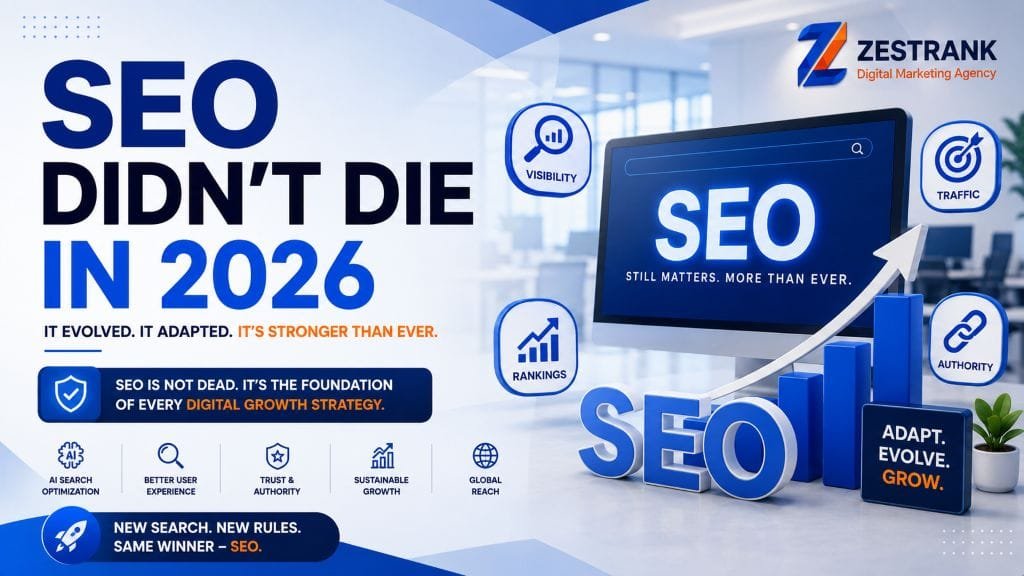
Quick answer: SEO isn’t disappearing — its scoreboard is. For two decades the formula was rank, click, traffic. Today you can rank #1 and get zero clicks because an AI answered above you, or you can be the exact source an AI quotes and see nothing in your analytics for it. Research from Seer Interactive shows brands cited inside AI Overviews still earn meaningfully more clicks than uncited competitors on the same query — so citation, not ranking position, is becoming the real metric. And because AI increasingly builds its answer from what other people say about your brand rather than what your website says about itself, the highest-leverage SEO work in 2026 looks less like technical optimisation and more like public relations.
We’ve written before about how Google ranking and AI visibility are two separate scores and laid out the tactical AEO playbook for getting cited, and separately unpacked what GEO actually means as a discipline. This post is the strategic piece underneath all three: why the whole game changed shape, and what your team’s job actually is now.
Chapter 1: You Trained Your Own Replacement {#chapter1}
The common story is that AI showed up and stole search traffic from businesses. That’s not quite right. For twenty years, the instruction from Google was simple: answer the question better than anyone else, cover every angle, be the clearest and most complete result on the page. Businesses got very good at it — one topic at a time, the open web ended up with a clean, well-organised answer to almost everything.
Once the answers were that good, Google didn’t need to send the click anywhere. It could read the work back directly. And it does this most on exactly the queries businesses fight hardest for — product searches, service searches, and other commercial intent queries see AI-generated answers appear noticeably more often than plain branded searches. The categories worth the most money are the ones most likely to get answered without a click.
Chapter 2: The Scoreboard Flipped {#chapter2}
For two decades, the scoreboard was: rank, click, traffic. More traffic meant you were winning. That scoreboard has effectively inverted. You can now rank #1 and get no click because an AI answered above you. You can also be the exact source quoted — word for word — and see nothing register in your analytics for it.
This creates a real measurement trap. A business owner glancing only at the traffic line in their dashboard might conclude a page is dead, when in fact that page is being read back to hundreds of people a week as the answer — it’s simply invisible to standard reporting.
But the inversion runs both ways, and this is the encouraging half. According to research from Seer Interactive, which tracked millions of queries across dozens of brands, pages cited inside AI Overviews earn a meaningfully higher click-through rate than uncited pages on the same query — the citation itself carries real value, even in a search landscape where overall click-through rates have fallen sharply once an AI summary appears, per Pew Research Center’s independent analysis of real user browsing data. The click didn’t disappear — it moved. It now belongs to whichever brand the AI decides to name.
Chapter 3: AI Doesn’t Read Your Website the Way You Think {#chapter3}
Here’s the part that changes how you should be spending your time: AI systems increasingly don’t just evaluate your website’s own authority — they weight what the rest of the internet says about your brand more heavily than what you say about yourself on your own pages.
That’s a genuine shift. Traditional SEO was built around pages you fully control. This new layer is built on pages you don’t — a Reddit thread you can’t edit, a review someone else wrote, a comparison post on a blog that isn’t yours. You can’t optimise those directly. You can only become the kind of brand the internet talks about accurately and positively, which requires knowing what that conversation currently sounds like in the first place.
This is exactly the “brand gap analysis” we cover in the AEO playbook — running your brand name, and your competitors’, through ChatGPT, Gemini, and Perplexity to see who gets recommended and who doesn’t. If an AI’s opinion of your brand is becoming a real ranking factor, the first step is simply being able to see what that opinion currently is.
Chapter 4: Did SEO Just Become the New PR? {#chapter4}
Once you see it this way, the job itself changes shape. A meaningful share of what drives AI citation now looks less like technical optimisation and more like classic public relations: getting mentioned in the right places, getting reviewed honestly, staying part of the ongoing conversation in your category.
And there’s a specific implication buried in the data on what actually earns citation: freshness tends to matter far more than an old, established reputation. A brand that’s smaller but keeps showing up with current, actively maintained content can get cited over a larger, more established competitor that’s coasting on an old reputation and hasn’t touched their content in months. There’s no one-time fix for this — no file to upload, no snippet to paste that makes AI systems trust a brand permanently. It’s earned in public, repeatedly, in more places than just your own website.
Chapter 5: SEO’s New Job {#chapter5}
Strip this down to what the actual work is now. The old job was to win the click. The new job is to become the trusted answer — the source an AI reaches for when constructing a response, the name a person remembers even if they never visit your website at all.
Keyword research, on-page structure, and technical SEO all still matter — but now in service of two goals rather than one: earning the ranking, and shaping what the internet as a whole says about your brand when a machine builds an answer in your category. The AI is going to describe your business either way. The only real choice is whether it’s describing the brand you actually built, or one the web pieced together about you by accident.
And the missing click shouldn’t be read as nothing happening. Every time an AI describes a brand accurately and favourably, that impression lands somewhere — often surfacing later as a direct or branded search when the person is finally ready to buy. The click lost today can be the customer closed next quarter; it just won’t show up in a last-click attribution report.
What This Means for a Delhi NCR Business {#delhi-ncr}
If you run a local business, this isn’t an abstract industry shift — it changes where your marketing budget and attention should go this quarter:
- Reviews are now a citation asset, not just a trust signal. A steady flow of specific, recent Google and platform reviews is doing double duty: reassuring a human reader and feeding the “what does the internet say about this brand” signal AI systems weight heavily. Our full guide to getting more Google reviews covers exactly how to build this pipeline.
- Being mentioned in local roundups matters more than another blog post. “Best [service] in Noida” or “[service] in Sector 62 reviewed” style articles on established local blogs and directories are exactly the kind of third-party page AI models lean on.
- Freshness is a genuine, low-cost lever. Updating existing pages with current information often moves the needle faster than publishing net-new content, because recency is one of the clearer signals AI systems respond to.
- You can compete with bigger brands here. A large competitor coasting on an old reputation with stale content is genuinely vulnerable to a smaller, sharper, more current brand in the same category — this is one of the few places local businesses have a real structural advantage over big-city or national competitors. Our Top 10 Local SEO Tips for Delhi NCR covers the foundational work this advantage sits on top of.
Frequently Asked Questions {#faqs}
Should I stop tracking website traffic altogether?
No — traffic is still a meaningful metric, just no longer a complete one. Pair it with AI referral tracking, branded search volume, and self-reported “how did you hear about us” data (covered in our AEO playbook) to get the fuller picture.
Does this mean backlinks and technical SEO don’t matter anymore?
They still matter, and remain a prerequisite — but they’re no longer the whole story. Off-site brand mentions, reviews, and being named in third-party roundups now carry weight that used to belong almost entirely to backlinks and domain authority.
How do I even find out what AI says about my brand right now?
Manually ask ChatGPT, Gemini, and Perplexity the exact questions a customer might ask — “best [your category] in [your area],” “[your brand] vs [competitor],” “is [your brand] good for [use case]” — and note whether you’re mentioned, and whether the tone is accurate. This is the starting point of a brand gap analysis.
Is this only relevant for big national brands, or does it apply to local businesses too?
It applies arguably more to local businesses, since local review platforms, local roundup articles, and Google Business Profile content are exactly the kind of third-party sources AI systems already trust for “near me” and city-specific queries.
Want a clear read on what AI currently says about your brand?
ZestRank runs AI Search Optimization alongside core SEO and local SEO for Delhi NCR businesses — including a full brand gap analysis showing exactly where you stand versus your named competitors in ChatGPT, Gemini, and Perplexity. Book a free strategy session and we’ll show you what the AI is already saying about you.
About the Author: Rohit Nandan
Rohit Nandan is ZestRank's Founder & Lead Digital Marketing Consultant and YouTube SEO Expert, with over 15 years of experience diagnosing and running search campaigns for businesses across Delhi NCR. He personally reviews ZestRank's client projects, with deep expertise in technical SEO infrastructure and YouTube optimization. Have a question about this post? Message Rohit directly on WhatsApp.
Free Consultation
Ready to see how these exact parameters can be configured to expand your physical business discovery indices?
Request Strategy Call WhatsApp Strategist