SEO Trends 2027 for Indian Businesses: What to Do Now, What to Stop (and What to Watch)
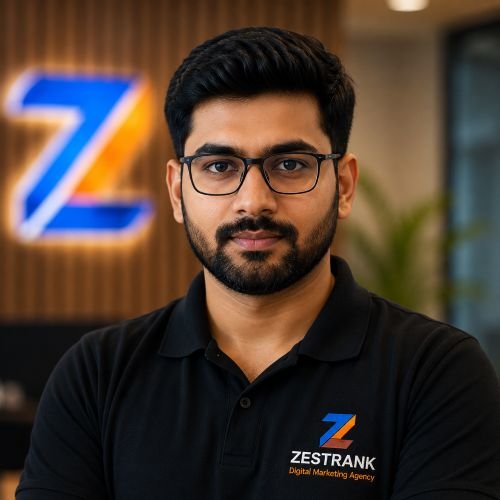
Rohit Nandan
Founder & Lead Digital Marketing Consultant
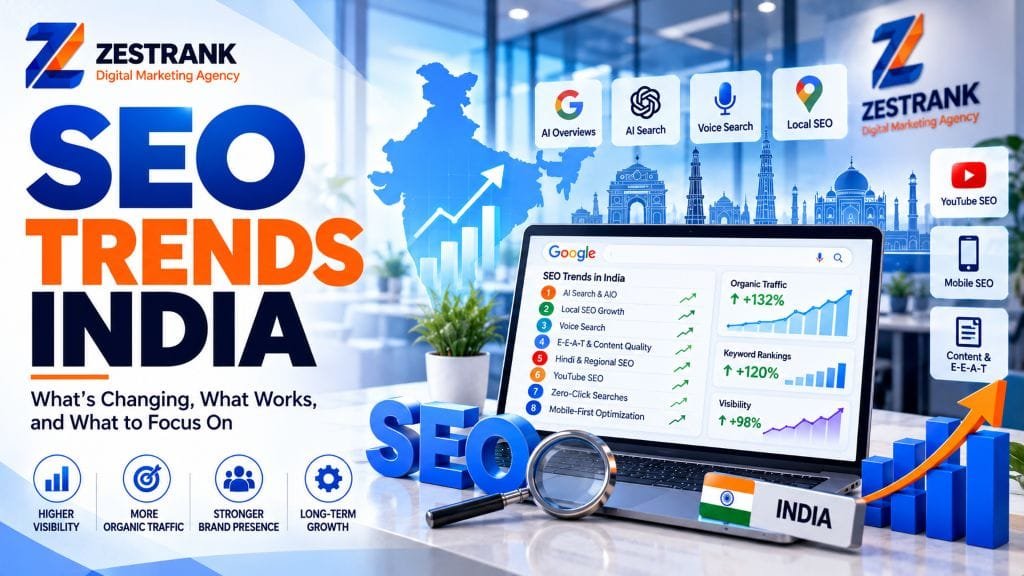
Quick answer: In 2027, SEO for Indian businesses means winning in two places at once: Google’s ranked results and the AI answers (Google AI Overviews and AI Mode, ChatGPT, Gemini, Perplexity) that increasingly sit above or beside them. The shifts that matter most are brand authority over page tricks, original expertise over rewritten summaries, Hindi and regional-language search, conversational queries, strong local SEO, and measuring leads instead of clicks. This guide covers 9 trends, a stop-doing list and a quarter-by-quarter plan.
Why plan for 2027 now
Budgets and plans for the new year are usually set in Q4, and the ground has already moved in 2026. Google rolled out a broad core update that finished on 8 April and another that began on 21 May and wrapped up in early June, and AI-generated answers are now part of everyday search. A plan built on 2024 assumptions will age badly.
One honest caveat: nobody outside Google knows exactly what 2027 will bring. This guide combines what has already changed in 2026 with what we see working for clients, so treat the 2027 calls as informed predictions, not promises. For the wider channel mix (video, WhatsApp, first-party data), see our digital marketing trends in India guide. This post stays focused on search.
Trend 1: Visibility now means ranking and being cited
Google has reported AI Overviews reaching around 2 billion people a month, and AI Mode, its full-screen conversational search, is now available in India in English, Hindi and several regional languages. Assistants like ChatGPT, Gemini and Perplexity also answer many questions without sending a click. Our GEO guide explains how these tools choose their sources.
What to do
- Put a direct 40 to 60 word answer under every important heading, the same way this post opens with a quick answer. Research on generative engine optimisation (Aggarwal et al., arXiv:2311.09735) found that adding sourced statistics and quotations was among the most effective tactics tested.
- Make each service page state plainly who you are, what you do, where, and for whom.
- Keep key content in plain HTML rather than behind scripts or tabs that crawlers may skip.
- Decide deliberately which crawlers can access your site in robots.txt.
- Read Google’s guidance on AI features and your website and our guides to AI SEO services in India and generative engine optimisation. Our AI Search Optimization service covers this work end to end.
Trend 2: Brand authority matters more than page-level tricks
Some SEO commentators reported that the March 2026 core update moved visibility away from aggregator and directory sites toward brand-owned sites, and that the May 2026 update continued the emphasis on trust and E-E-A-T. Google does not publish a breakdown of what changes in a core update, so treat this as an industry reading, not a confirmed rule. The direction is still clear: a recognisable, trusted brand is harder to fake than a well-optimised page.
What to do
- Keep your business name, address, phone number and profiles identical everywhere. In our case study, mismatched names and phone formats across Google, Justdial and the website were among the first problems we fixed.
- Collect genuine reviews (our review process shows how) and publish real case studies with named authors.
- Earn mentions on credible industry sites, not bulk directories.
- Avoid publishing thin pages on big third-party domains just to borrow their authority. Google’s site reputation abuse policy targets exactly that.
Trend 3: Original experience and data beat rewritten summaries
Analysts tracking the March 2026 update reported that pages with original analysis, first-hand data and specific examples held or gained position. If your post only restates what is already on page one, it gives Google and AI assistants little reason to rank or cite it.
What to do
- Publish one original piece per quarter: a survey of business owners, anonymised results from your own campaigns, or a pricing study.
- Show the author’s name, role and experience on every article.
- Use real screenshots and examples instead of stock images.
- What we saw first-hand: in our published Delhi NCR case study, a group of four clinics grew organic leads from 47 to 240 a month over nine months, with no paid ads. The earliest gains came from fixing basics: verifying a Google Business Profile that had never been verified, making business names and phone numbers identical across directories, and replacing the generic “Medical Clinic” category with specific ones.
- A pattern worth checking in your own data: in the same case study, combined Google reviews across the four locations grew from 42 to 250, and 7 of 12 “ghost impression” keywords (high impressions, zero clicks) reached the top 5 within six weeks of targeted fixes. Our ghost impression keywords guide shows how to find them in Search Console.
Trend 4: Hindi and regional-language search keeps growing
Google has expanded AI Mode to Hindi plus Bengali, Kannada, Malayalam, Marathi, Tamil, Telugu and Urdu, and its conversational Search Live feature launched in India in English and Hindi. People ask in the language they think in, including Hinglish typed in Roman script.
What to do
- Check Search Console for Hindi and Hinglish queries before deciding what to translate.
- Write native Hindi pages for your highest-intent services instead of machine-translating English ones.
- Use hreflang correctly when you run language versions of the same page. See Google’s guide to localized versions.
- For Delhi NCR businesses, mix city and locality names the way customers actually type them. See our SEO services in Delhi and local SEO tips for Delhi NCR.
Trend 5: Conversational, voice and visual queries
Search is moving from three-word keywords to full questions, follow-ups, voice and camera. Voice and image search are supported in AI Mode in India, so your content should answer a question and the next three questions that follow it. Our digital marketing trends guide also covers voice and conversational search in India.
What to do
- Write FAQ answers in natural language and keep them short.
- Cover obvious follow-up questions inside the same article.
- Use descriptive image file names and alt text, and show real photos of your work.
- Add transcripts to videos. Our YouTube SEO services cover this.
Trend 6: Local SEO stays the highest-intent channel
For “near me” and service-in-city searches, the Google local 3-pack and your Google Business Profile still decide who gets the call. AI answers for local queries lean on the same profile and review data.
What to do
- Complete every Google Business Profile field: categories, services, photos, hours and a clear description. Our Google Business Profile optimization guide walks through each one.
- Build a simple process to ask happy customers for reviews and to reply to every review. See how to get more Google reviews.
- Give each location page unique content, not a copy with the city name swapped.
- Track calls, direction requests and WhatsApp enquiries.
- If traffic drops, follow our 7-step local SEO traffic drop guide. For a worked example of the full sequence, read our 410% lead growth case study and how to rank #1 on Google Maps in Delhi NCR. Our Local SEO service handles the setup.
Trend 7: Search spreads beyond Google
Buyers research on YouTube, Reddit, LinkedIn, Quora and community forums, and AI assistants often cite those sources. Being useful there can bring qualified visitors and brand mentions.
What to do
- Pick two platforms where your buyers actually ask questions.
- Give genuinely helpful answers, mention your business only where it fits, and be open about your affiliation.
- Reuse your original data and insights across platforms instead of posting promotional copy.
Trend 8: Technical SEO becomes AI readiness
AI systems and search engines both need to reach, understand and trust your pages. Basic technical hygiene is no longer optional.
What to do
- Pass Core Web Vitals on mobile. Google explains the metrics in its Core Web Vitals documentation.
- Keep one canonical URL per topic and fix pages that compete for the same keyword. Start with our list of technical SEO mistakes.
- Serve important content in the initial HTML.
- Add accurate structured data (Organization, LocalBusiness, Article, FAQ, Product where relevant). See Google’s introduction to structured data.
- An llms.txt file is cheap to publish, and we have one, but treat it as housekeeping, not a ranking lever.
- Check each key page with our free SEO audit checklist and on-page SEO checklist.
Trend 9: Measurement shifts from clicks to leads and visibility
Even when you rank well, some informational clicks will go to AI answers. A report that shows only rankings and sessions will look worse than the real business impact.
What to do
- Track qualified enquiries: calls, WhatsApp chats, form leads and booked sessions. See our guide to WhatsApp Business marketing in India.
- Watch impressions, branded search growth and conversions from organic traffic, plus ghost impression keywords that rank without earning clicks.
- Once a month, test your top 20 customer questions in Google, ChatGPT and Perplexity and note whether you are mentioned.
- Tag campaigns with UTM parameters and set up WhatsApp click events.
What to stop doing in 2027
- Publishing mass AI-generated pages with no expert editing.
- Changing the year in old titles without updating the content.
- Stuffing exact-match keywords at the cost of readability.
- Buying bulk links or directory submissions.
- Reporting on rankings alone.
- Treating Hindi content as an afterthought translation.
A practical 2027 SEO plan, quarter by quarter
| Quarter | Focus | Key actions |
|---|---|---|
| Q4 2026 (now) | Foundation | Audit your top 20 pages, fix keyword cannibalisation, add quick-answer blocks, complete your Google Business Profile, set up lead tracking including WhatsApp |
| Q1 2027 | Language and proof | Launch Hindi pages for your top 3 services, publish your first original data piece, add schema |
| Q2 2027 | Authority | Earn mentions on credible industry sites, publish on YouTube and LinkedIn, collect reviews and case studies |
| Q3 2027 | Review | Compare results with Google’s core update dates, refresh underperforming pages, retest AI answers for your top 20 questions |
| Q4 2027 | Refresh | Update this guide for 2028 and drop whatever no longer works |
What to watch in 2027
- Google’s core update calendar. Analysts note several broad updates a year, so expect volatility and avoid knee-jerk changes during a rollout.
- How AI Mode and AI Overviews choose and display citations.
- Further regional-language rollouts in India.
- How analytics tools report traffic from AI assistants.
How ZestRank can help
We are a Noida-based SEO and digital marketing agency that builds organic rankings and runs paid campaigns for businesses that want measurable revenue. If you want a clear 2027 plan for your website, our SEO services team will audit where you stand and show you what to fix first. See our SEO packages and pricing in Delhi for what an engagement costs, and how long SEO takes in India for realistic timelines. Paid search budgets are part of the same plan, so see our guide to Google Ads pricing in India too.
Book a free strategy session: zestrank.com/contact-us | +91 83683 98283 | info@zestrank.com
Frequently asked questions
Is SEO still worth it in 2027?
Yes. AI answers draw on the same web content that search engines index, so strong pages, a trusted brand and clear expertise help in both places. What changes is the scorecard: expect fewer clicks on simple informational queries and more value from enquiries, calls and brand searches.
What is the difference between SEO, AEO and GEO?
SEO aims to rank pages in search results. AEO (answer engine optimisation) aims to be the direct answer a search engine or assistant gives. GEO (generative engine optimisation) aims to be cited in AI-generated answers. In practice they share the same foundations: clear answers, real expertise, strong brand signals and clean technical SEO. Our full GEO guide goes deeper.
Should Indian businesses publish Hindi or regional-language content?
If your customers search in those languages, yes. Check your Search Console queries first, then write native pages for your highest-intent services instead of machine-translating English pages. Google has expanded AI Mode to Hindi and several other Indian languages, so demand is likely to grow.
How can my business get mentioned in Google AI answers or ChatGPT? No one can guarantee a mention. What improves your chances is clear, crawlable pages that answer questions directly, consistent business information, genuine reviews and mentions on credible third-party sites, and original content that other sources want to cite.
How do I measure SEO when clicks fall?
Track qualified enquiries (calls, WhatsApp chats and form leads), branded search growth, impressions and conversions from organic traffic, and check AI answers for your top questions each month. Rankings and traffic alone no longer show whether SEO is paying for itself.
Sources
- TechCrunch, “Google’s Search Live comes to India, AI Mode gets more languages” (October 2025)
- TechCrunch, “Google introduces AI mode to users in India” (June 2025)
- Panto, Google Gemini statistics (AI Overviews usage figure reported in early 2026)
- Distl, analysis of the March 2026 core update
- Click Intelligence, report on the May 2026 core update
- OnlineMarketing.de, May 2026 core update completed (3 June 2026)
- TrueLogic, Google rolls out May 2026 core update
- Aggarwal et al., “GEO: Generative Engine Optimization,” arXiv:2311.09735
- Google Search Central: AI features and your website, spam policies, Core Web Vitals, structured data, localized versions
- ZestRank, Case Study: 410% Lead Growth From Local SEO in Delhi and Generative Engine Optimization (GEO) guide
Additional Resource: Google AI Search October 2026 Update
Explore our detailed Google AI Search update guide covering inline citations, publisher visibility, and practical steps for measuring AI search performance.
Read the Google AI Search Update Guide
Follow ZestRank on Google
Add ZestRank as your preferred source to see our latest SEO & AI search updates first in Google Search.
About the Author: Rohit Nandan
Founder & Lead Digital Marketing ConsultantRohit Nandan is ZestRank's Founder & Lead Digital Marketing Consultant and YouTube SEO Expert, with over 15 years of experience diagnosing and running search campaigns for businesses across Delhi NCR. He personally reviews ZestRank's client projects, with deep expertise in technical SEO infrastructure and YouTube optimization. Have a question about this post? Message Rohit directly on WhatsApp.
Free Consultation
Ready to see how these exact parameters can be configured to expand your physical business discovery indices?
Request Strategy Call WhatsApp Strategist
- Ultra-fast NVMe storage & LiteSpeed cache
- Free domain, SSL & daily backups
- Extra 10% off with coupon: 1ROHIT89
Starts at ₹139/mo* • 30-day money-back guarantee